


Explaining the 2026 Timed Entry Permits in U.S. National Parks
Updated: Apr 7
How Park Permits (or Lack Thereof) Could Affect Your Plans

If you’ve been to a national park in recent years, you’ve likely experienced a timed entry permit. In response to an increase in outdoor recreation as a result of the COVID-19 pandemic, popular parks implemented strict permits to reduce traffic. While many park goers scoffed at these restrictive measures, the idea was to improve the overall park experience for visitors without negatively impacting the parks’ resources.
This year, the following national parks will be using a timed entry system: Acadia National Park, Haleakala National Park, and Rocky Mountain National Park. Read more to see how each permit system will work this year.
Pros and Cons of a Timed Entry Permit System
I’m sure many a flustered traveler have gotten turned away at the entry station for not having timed entry permits – a frustrating situation to endure. Why are these permits necessary, and who are they benefiting, anyway?
Pros:
There are many ways in which a timed entry permit benefits the park visitor. For starters, less traffic means more parking availability and less circling the same lots waiting for someone to leave. Fewer visitors at a time leads to less busy trails and attractions, making the experience more tranquil and relaxing. Bathrooms become less overrun, trash receptacles become less full, and visitors can focus more on nature than human impact.
For the parks themselves, the lowered human impact is a huge benefit. Having less crowded trails means fewer people stepping off trail to accommodate other hikers, reducing the erosion of trails and potentially fragile ecosystems. Rangers can spend more time educating the public rather than directing traffic and settling interpersonal spatial disputes.
Cons:
Of course, not everybody is thrilled about timed entry permits. Many visitors feel that they are entitled to visiting a park whenever they want, regardless of conditions or traffic. Imposing limits and restrictions makes planning harder, and not being able to go to certain parts of the park or see certain attractions can be frustrating.
Many visitors circumvent timed entry permits by visiting before or after restricted times. Being on some of the windy roads in the dark can lead to dangerous circumstances. Wildlife is often more active at dawn and dusk, so visitors can risk unfortunate wildlife encounters trying to get to the park really early or stay really late. Being on a hike before sunrise or after sunset can lead to variable conditions that many visitors aren’t prepared for.
Which Parks Will Have Timed Entry Permits in 2026?
Acadia National Park (Maine)
Between May 20th and October 25th, Cadillac Summit Road requires timed entry permits for vehicles, including motorcycles, motorized scooters, and mopeds. (Note: this does not apply to visitors who enter the park via foot, bike, or taxi.)
Reservations are per vehicle, and re-entry is not allowed. Regardless of permit validity, RVs and trailers are not permitted on Cadillac Summit Road, and all vehicles must not exceed 21 feet in length including bike racks and hitches.
Permits may be obtained from recreation.gov for $6.00. 30% of permits are available at 10:00 A.M. EDT 90 days in advance of the reservation date, and 70% are available at 10:00 A.M. EDT two days in advance.
There are two permit types that service different times of day: Sunrise and Daylight.
Sunrise Permits (1 vehicle per 7 days) | ||
Dates | Start Time | End Time |
May 20th - July 31st | 4:00 A.M. | 5:30 A.M. |
August 1st - August 31st | 4:30 A.M. | 6:00 A.M. |
September 1st - September 30th | 5:00 A.M. | 6:30 A.M. |
October 1st - October 15th | 5:30 A.M. | 7:00 A.M. |
October 16th - October 25th | 6:00 A.M. | 7:30 A.M. |
Sunrise Permits (1 vehicle per 1 day) | ||
Dates | Start Time | End Time |
May 20th - July 31st | 6:00 A.M. | 8:00 P.M. |
August 1st - August 31st | 6:30 A.M. | 7:30 P.M. |
September 1st - September 30th | 7:00 A.M. | 7:00 P.M. |
October 1st - October 15th | 7:00 A.M. | 6:30 P.M. |
October 16th - October 25th | 7:30 A.M. | 6:00 P.M. |
Haleakala National Park (Hawaii)
Timed entry permits are required between 3:00 A.M. and 7:00 A.M., as this is when visitors can watch the sunrise from the summit of Haleakala. Permits are an additional $1.00 per vehicle (not per person) on top of the pass to get into the park. After 7:00 A.M., permits are no longer required.
Permits are available to book up to 60 days in advance. Some last-minute permits may be released two days in advance. Permits may be obtained through recreation.gov.
Rocky Mountain National Park (Colorado)
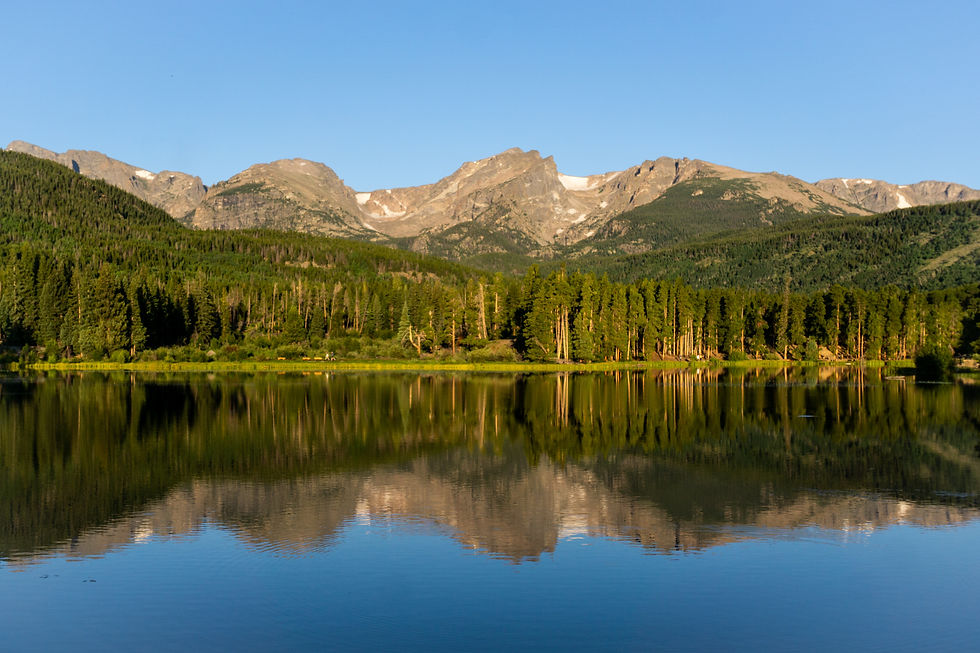
Between May 22nd and mid-October, Rocky Mountain National Park will implement two different entry permits. Please arrive at the entry station in your allotted two-hour window of time. Permits are available on recreation.gov and cost $2.00.
There are two types of timed entry permits: Timed Entry and Timed Entry+.
Timed Entry:
Most of the park can be accessed with this permit; the only exception is Bear Lake Road. Permits are required from May 22nd until October 12th between 9:00 A.M. and 2:00 P.M., and the park can be exited and re-entered with a valid reservation. You can still enter the park prior to 9:00 A.M. or after 2:00 P.M. without a reservation.
Timed Entry+:
If you want to experience anything along Bear Lake Road, you’ll need a more extensive permit. These permits are required from May 22nd until October 18th between 5:00 A.M. and 6:00 P.M. Again, you can enter this area before or after permit times are in effect, but it will take more extensive planning to safely enjoy this area outside of the permitted time window.
Regardless of type, permits become available at the following times for the following dates:
Release Date (8:00 A.M. MDT) | Reservation Dates |
May 1st | May 22nd - June 30th |
June 1st | July 1st - July 31st |
July 1st | August 1st - August 31st |
August 1st | September 1st - September 30th |
September 1st | October 1st - October 18th |
Additional permits are released at 7:00 P.M. MDT the night before entry, but they sell out very quickly, so keep that in mind while planning your trip. | |
Which Parks Used to Have Timed Entry Permits but Won’t in 2026?
Unlike recent years, these four national parks will no longer be requiring timed entry permits:
Arches National Park (Utah)
Glacier National Park (Montana)
Mount Rainier National Park (Washington)
Yosemite National Park (California)

That said, these parks are very popular. The increased quantity of visitors will likely impede wait times and traffic flow, so be prepared for long lines and backup plans!
Other Types of Restrictions
Glacier National Park (Montana)
Unlike in recent years, Glacier National Park will not be requiring vehicle reservations; however, they will begin testing a ticketed-only shuttle system and a three-hour limited parking system at Logan Pass.
Zion National Park (Utah)
Beginning on June 7th, Zion National Park will enforce large vehicle limits that already exist on the Zion-Mt. Carmel Highway.
For a single vehicle (without pulling anything behind it), a “large vehicle” means:
35 ft 9 in (10.9m) long
7 ft 10 in (2.39m) wide
11 ft 4 in (3.45m) tall
50,000 lbs (22,680 kg)
For combined vehicles (e.g. a vehicle with a trailer), a “large vehicle” means:
a total length of 50 ft (15.24m) with the trailer not exceeding 26 ft (7.92m) from hitch to rear axel
7 ft 10 in (2.39m) wide
11 ft 4 in (3.45m) tall
50,000 lbs (22,680 kg)
If this doesn’t sound like your vehicle situation, you’re good to go. If it does, be sure to figure out accommodations before entering the park.
General
Several individual hikes within parks require permits (e.g. Half Dome in Yosemite National Park, Angel’s Landing in Zion National Park, etc.). Be sure to do your due diligence when researching your visit to ensure you have the proper information to enjoy your stay to the fullest!

The Bottom Line
National parks have become increasingly popular as more and more individuals flock to the outdoors to enjoy the respite of some of the best scenery in the U.S. Timed entry permits are a response to the larger crowds that the parks have drawn in the past few years; while the system is not perfect, it is the one that is currently in place to make the park experience as enjoyable and minimally-obtrusive to visitors as possible.
No matter what restrictions are in place at a national park you plan to visit, it is always better to have several backup plans and itineraries, just in case. Be sure to follow all park rules and regulations. It’s up to all of us to leave nature better for the next visitor, so please always stay on trail, dispose of trash properly, and keep your distance from wildlife.


Comments